Deployment Platform Comparisons
Head-to-head comparisons of deployment platforms and self-hosted PaaS: Vercel vs Railway, Coolify vs Dokploy, Render vs DigitalOcean and more.
Deployment Platform Comparisons
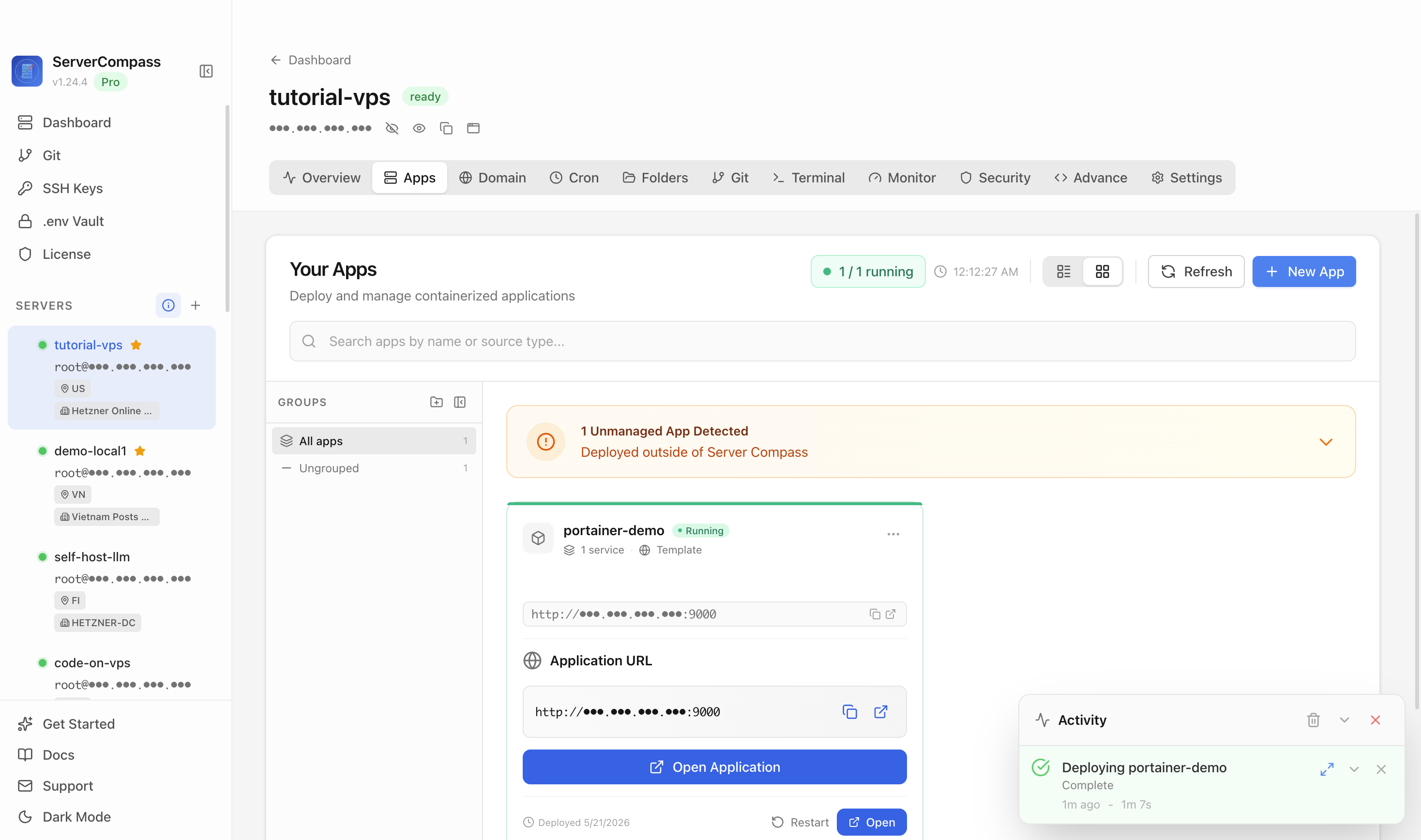
Self-hosters want a simpler middle path before their containers turn into platform engineering
A fresh self-hosted thread asks what people cut back after their setups became too complex, while another documents a migration from one hardened Docker Compose VM into a TrueNAS-backed Nomad/Consul/Vault platform. Together they show the middle-market…
Compose stack managers are outgrowing Portainer before they actually need Kubernetes
Fresh self-hosted threads show operators stuck in the middle between a single Docker Compose VM and full platform engineering. One Portainer user is annoyed by git-cloned stack management and is evaluating Komodo, env repositories, TOML sync, and Ansible…

Lighter Than Kubernetes: Compose vs Podman vs K8s for a Single-Node Homelab
You want more structure than loose docker run commands but suspect Kubernetes is overkill for one Proxmox box. A practical comparison of Compose, rootless Podman, Podman Kube, and lightweight K8s.
Hosted vs Self-Hosted Nextcloud for Small Teams: The Hidden Ops Costs Decide It
Managed Nextcloud's monthly fee looks expensive next to a $10 VPS — until you price the ops the host quietly does for you. A real hosted-vs-self-hosted comparison for small teams.

Proxmox panels vs lightweight deploy tools — which one do you actually need?
Homelab and VPS users keep conflating infrastructure management with application deployment. Here's how to tell whether you need a full Proxmox-style panel or just a deploy layer with monitoring.
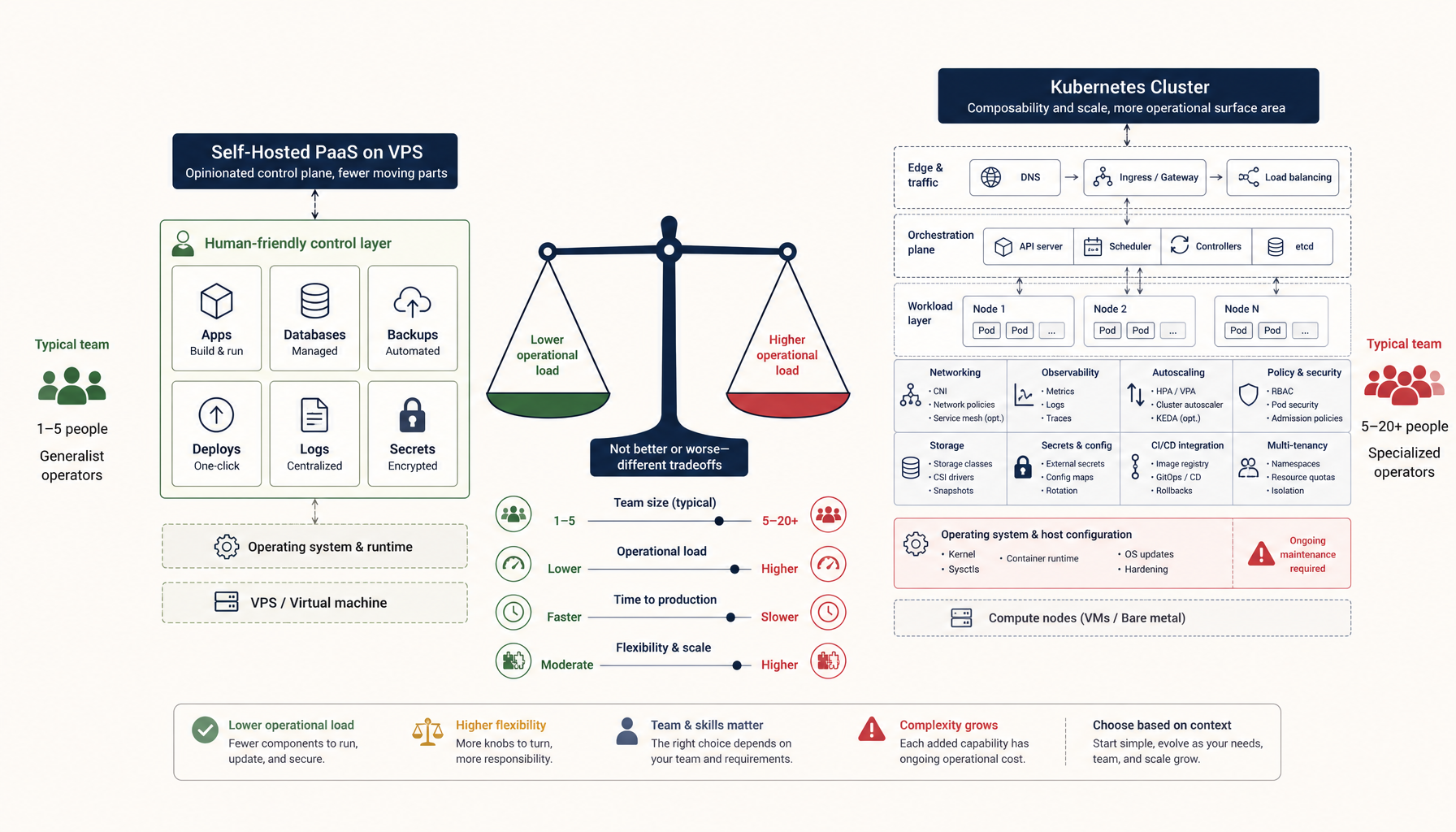
Coolify vs Kubernetes: Which Is Production-Ready for Your Team?
Coolify and Kubernetes live at opposite ends of an operational complexity scale. The honest sizing decision (it isn't binary).
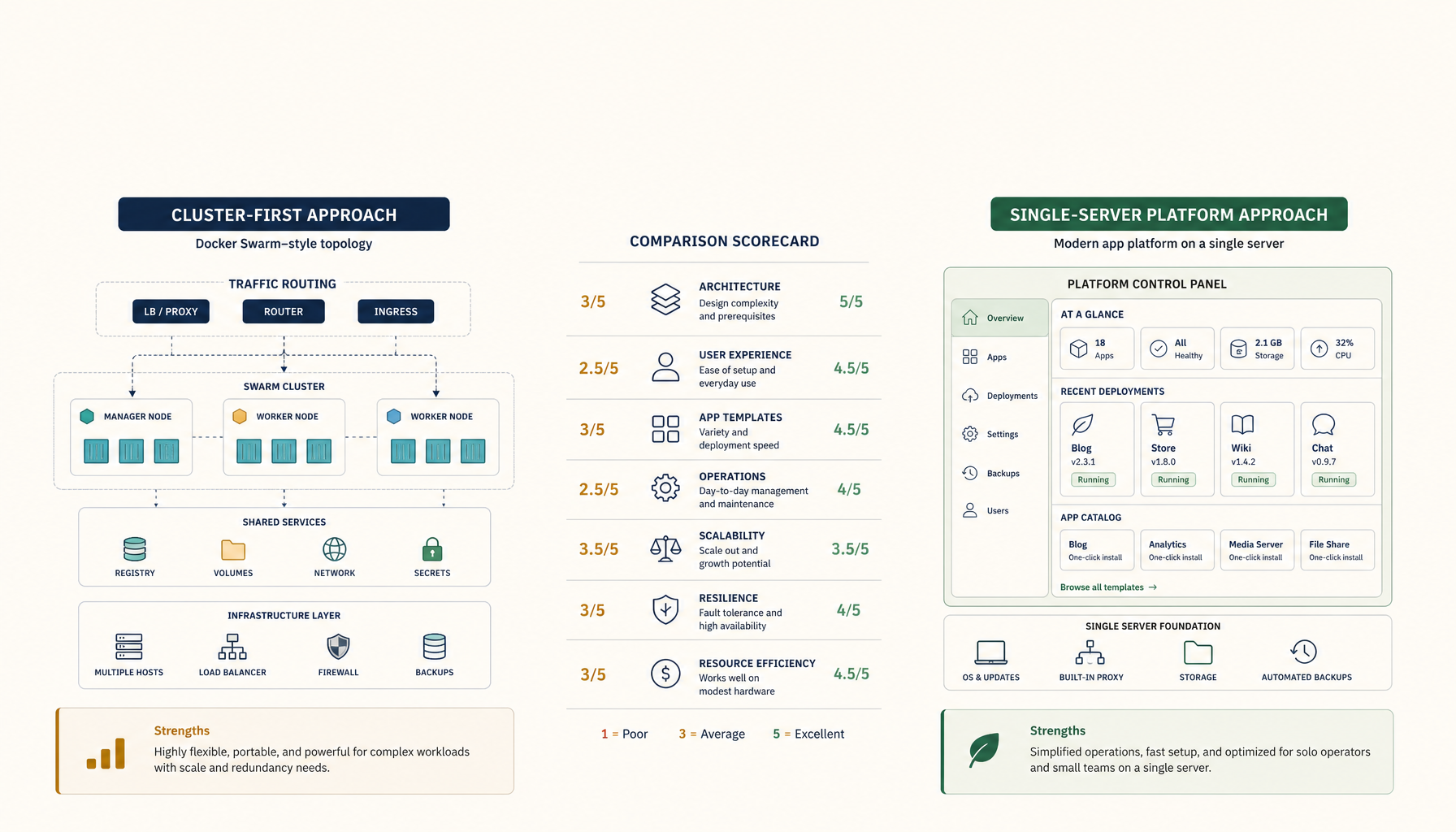
CapRover vs Coolify: Self-Hosted PaaS Comparison
Head-to-head comparison for developers choosing between CapRover and Coolify for self-hosted deployments.
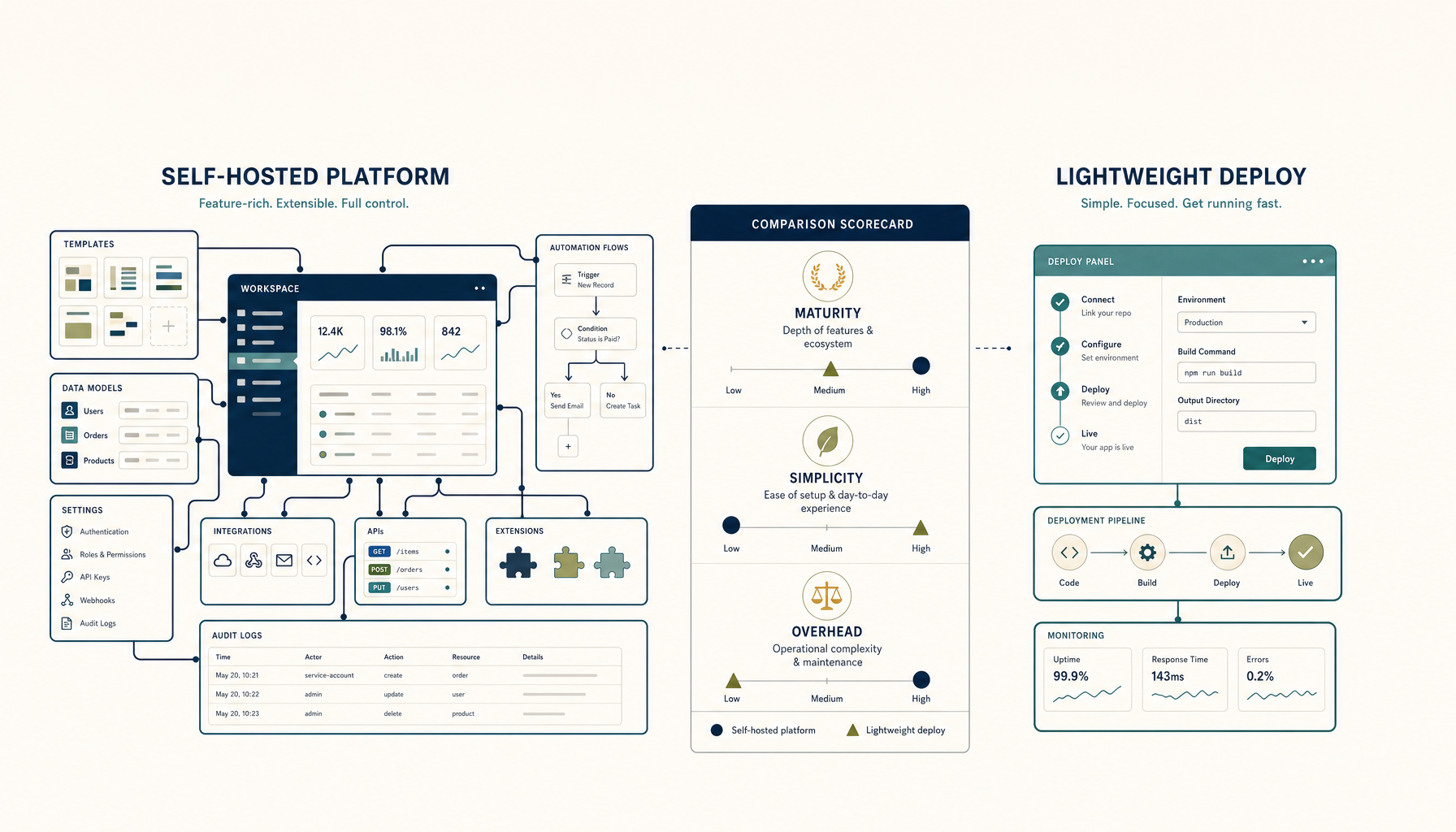
Coolify vs Dokploy: Self-Hosted PaaS Comparison
Both let you run your own Heroku. Which one should you pick for your VPS?
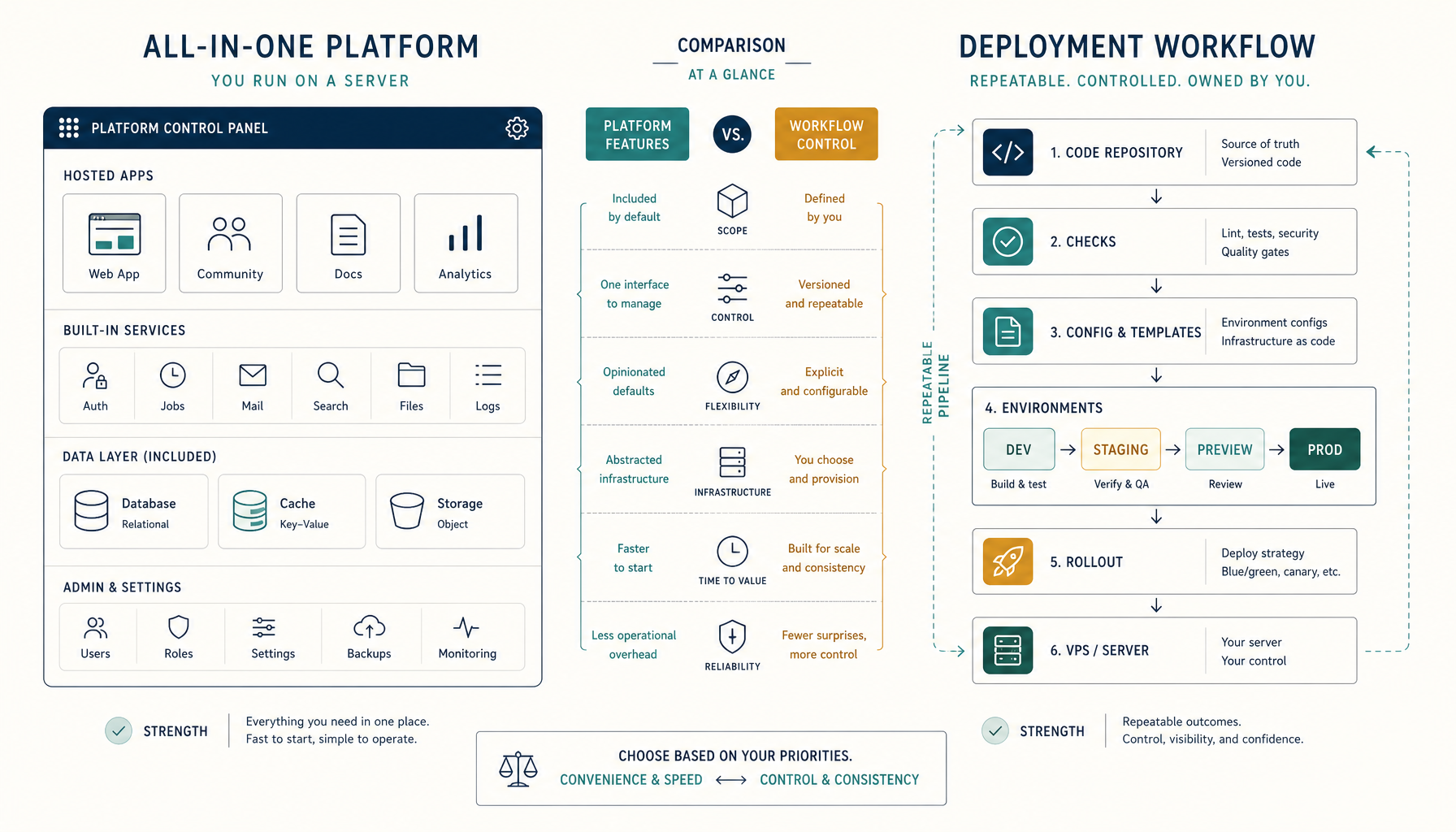
Coolify vs ServerCompass: Different Approaches to VPS Deployment
Coolify is a self-hosted PaaS. ServerCompass is a deployment workflow tool. Which fits your needs?
- Dokploy vs ServerCompass: Self-Hosted Deploy Tools ComparedHead-to-head comparison for developers choosing between Dokploy and ServerCompass for VPS deployments.
- Fly.io vs Railway: Infrastructure Control vs Platform SimplicityHead-to-head comparison for developers choosing between Fly.io and Railway for deploying applications.
- Hetzner vs DigitalOcean: VPS Value ShowdownHead-to-head comparison of the two most popular VPS providers for developers. One wins on price, the other on ecosystem.
- Railway vs Render: PaaS for Developers ComparedBoth promise easy deployments for developers. Which one delivers better value?
- Render vs DigitalOcean: Managed PaaS vs Flexible CloudHead-to-head comparison for developers choosing between Render and DigitalOcean for hosting applications.
- Vercel vs Netlify: The JAMstack Platform ShowdownHead-to-head comparison for developers choosing between Vercel and Netlify for frontend hosting.
- Vercel vs Railway: Frontend Platform vs Backend-First PaaSHead-to-head comparison for developers choosing between Vercel and Railway for their next project.
- Self-hosters need a middle path between one Compose VM and full platform engineeringMost self-hosters eventually hit a wall: a single Docker Compose VM starts to creak, but building a full internal platform with Nomad, Consul, Vault, and custom automation is a project in itself. There is a practical middle path worth knowing.
- Home-server app managers keep leaking abstraction at Docker, Compose, TrueNAS app, and Samba boundariesHome-server app managers promise a friendlier interface over Docker, Compose, and storage services — but operators keep hitting the same wall: the UI covers 90% of what you need and leaves the last 10% completely inaccessible. Here is what those friction points look like in practice and how to plan around them.