CapRover vs Coolify: Self-Hosted PaaS Comparison
Head-to-head comparison for developers choosing between CapRover and Coolify for self-hosted deployments.
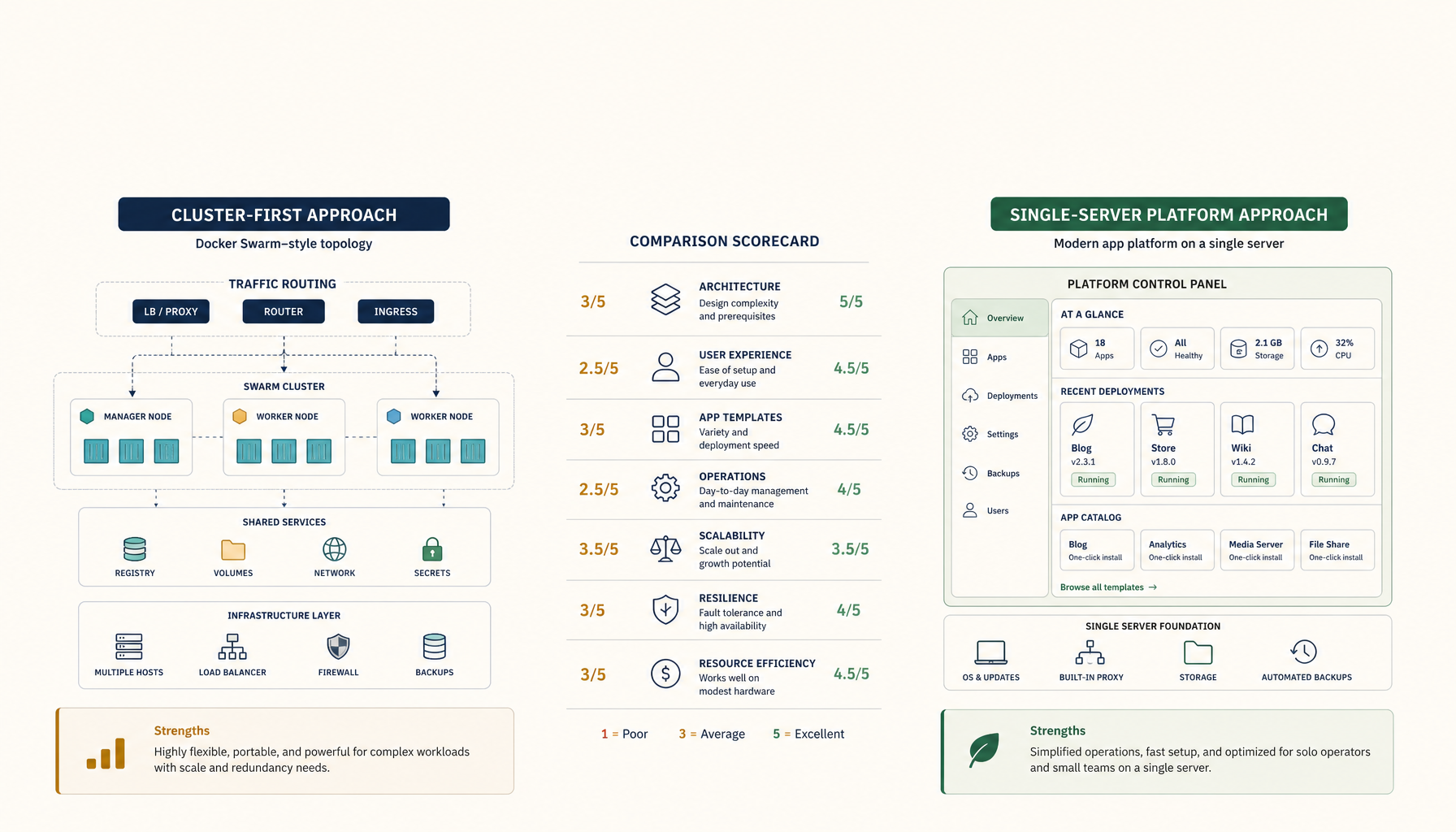
Quick answer: Pick Coolify if you want a modern UI, active development, and simpler single-server deployments. Pick CapRover if you need Docker Swarm clustering out of the box.
Comparison Table
| Criteria | CapRover | Coolify |
|---|---|---|
| Architecture | Docker Swarm native | Docker Compose + Swarm support |
| UI/UX | Functional, dated | Modern, polished |
| Development pace | Slower, stable | Active, frequent updates |
| One-click apps | Large template library | Growing template library |
| Multi-server | Native Swarm clustering | Supported but newer |
| Learning curve | Medium | Easy to Medium |
| Verdict | Best for clusters | Best for single servers |
CapRover Overview
Strengths
- Mature Docker Swarm integration
- Proven for multi-node clusters
- Large one-click app template library
- Automatic SSL with Let's Encrypt
- Simple Dockerfile-based deployments
Weaknesses
- UI feels dated compared to modern tools
- Development pace has slowed
- Documentation could be more comprehensive
- Less active community engagement
- Some features feel abandoned
Best for
- Teams already using Docker Swarm
- Multi-server cluster deployments
- Projects needing proven stability
- Developers familiar with older PaaS patterns
Coolify Overview
Strengths
- Modern, clean user interface
- Very active development and community
- Simple single-server setup
- Git-based deployments with webhooks
- Good Docker Compose support
Weaknesses
- Younger project, still maturing
- Multi-server support less battle-tested
- Breaking changes between versions
- Smaller (but growing) template library
- Some advanced features still in development
Best for
- Single-server self-hosted deployments
- Teams wanting modern tooling
- Projects that value active maintenance
- Developers new to self-hosted PaaS
When to pick CapRover
Pick CapRover if:
- You need Docker Swarm clustering today
- Multi-node high availability is required
- You prefer proven, stable software
- Your team is familiar with Swarm concepts
- You want a large template library immediately
When to pick Coolify
Pick Coolify if:
- You are deploying to a single server
- Modern UI and UX matter to you
- You want active development and updates
- You prefer Docker Compose workflows
- You value community engagement and support
Verdict
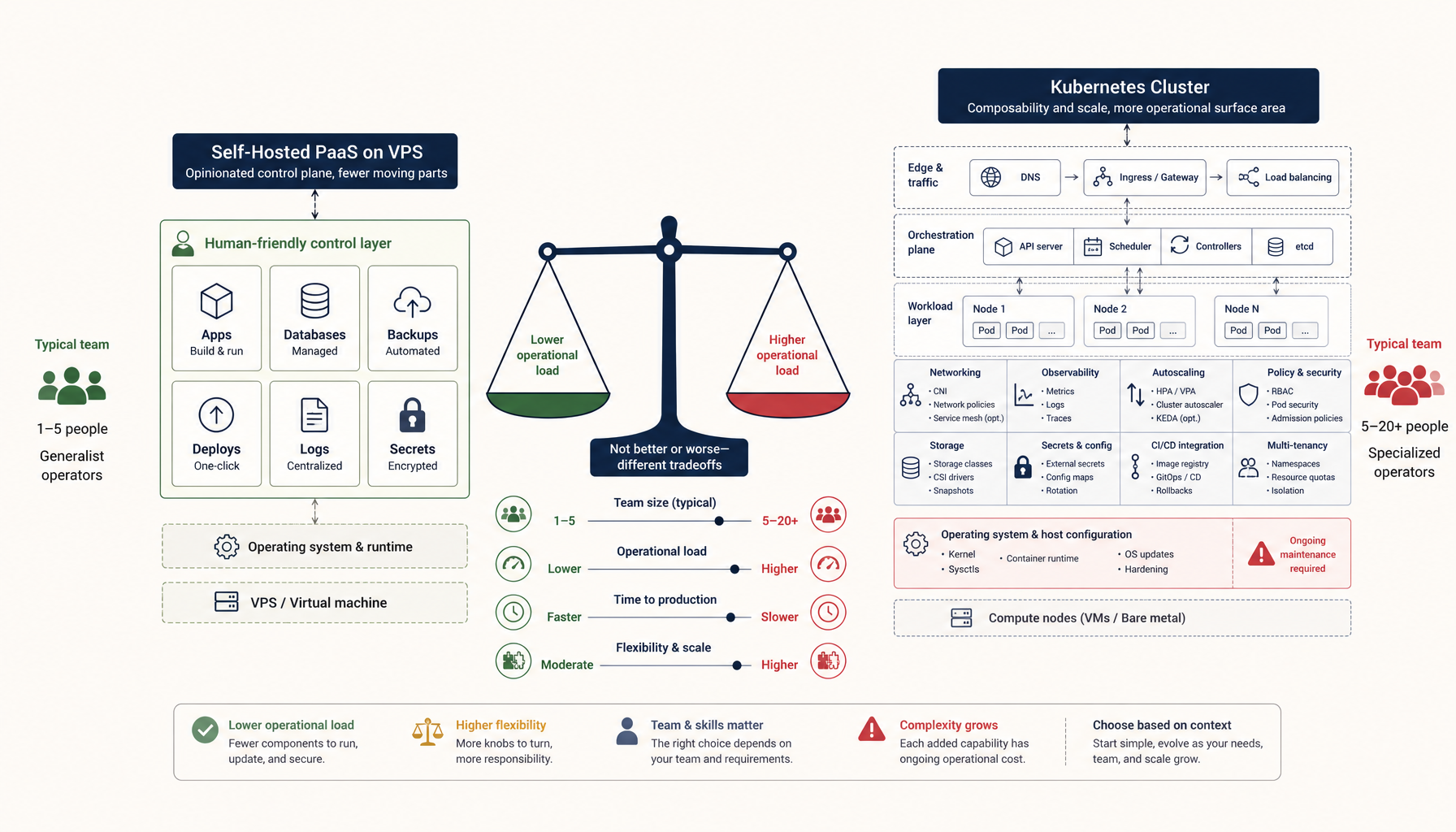
Coolify is the better choice for most developers in 2026. The active development, modern interface, and simpler setup make it easier to adopt. For single-server deployments, Coolify provides everything you need with less friction.
CapRover remains the stronger choice if you specifically need Docker Swarm clustering across multiple nodes. It is more mature for that use case, even if the UI and development pace lag behind.
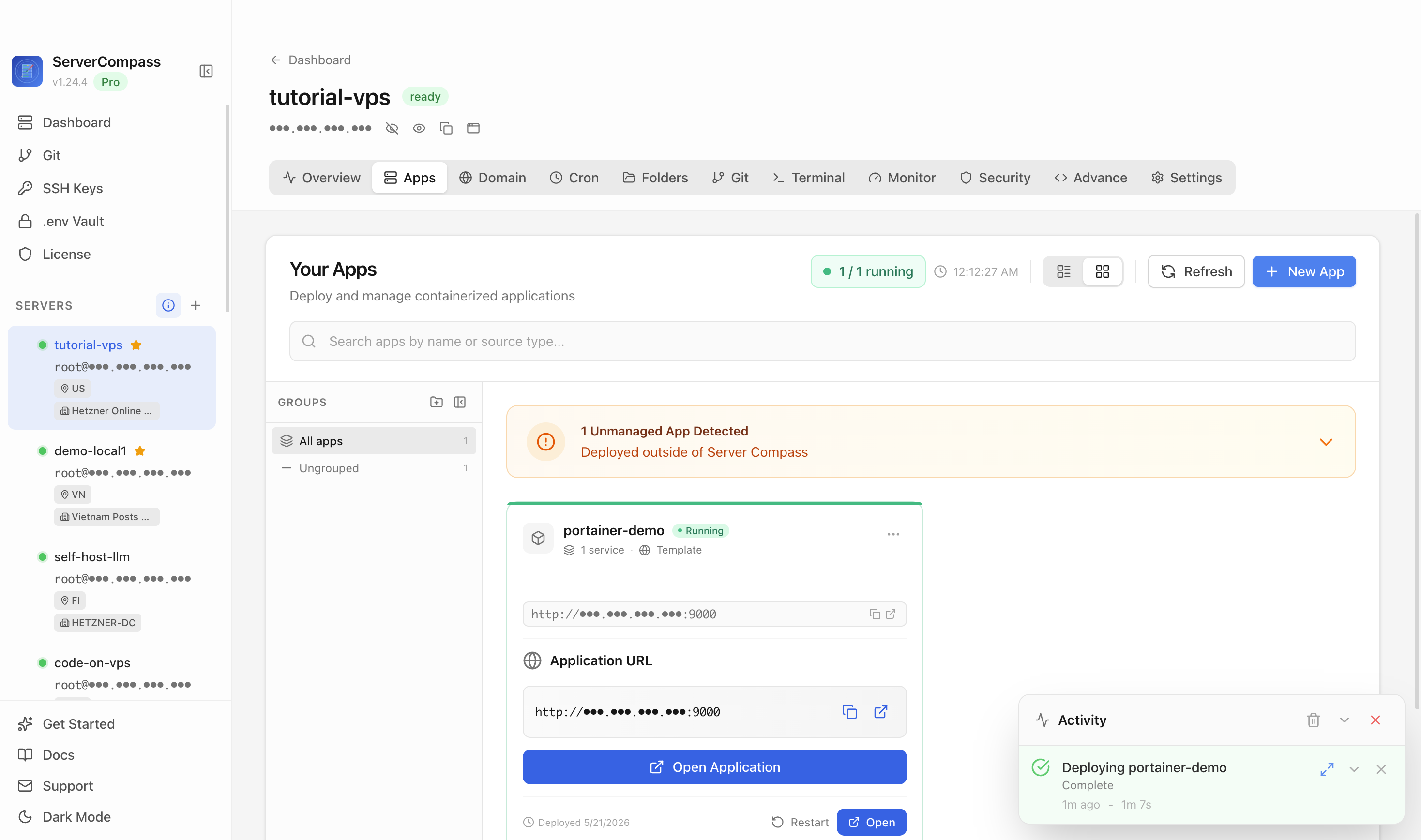
For teams wanting even more control with less abstraction, consider ServerCompass or a pure Docker Compose setup on your VPS.
Where to go next
Tutorials:
Related comparisons:
ServerCompass: