When a Budget Homelab Beats a Pile of Small VPS Bills — and When It Doesn't
Beginners are swapping $5/month VPS instances for one mini PC running a mixed stack. Sometimes that's smart, sometimes it just moves the cost to your time. How to decide.

There's a popular move right now: a beginner adds up their $5-here, $7-there VPS bills, sees $40/month, and buys a mini PC to run "everything" at home instead. Sometimes that's a genuinely great trade. Sometimes it just converts a money cost into a time-and-reliability cost they didn't price in. The decision is real and worth making deliberately rather than by vibes.
The honest cost comparison
A budget homelab box isn't free just because there's no monthly invoice:
- Power — a mini PC at 15–30W runs ~$3–7/month depending on rates; a hungrier tower far more. Spinning disks and a NAS add to it.
- Your time — patching, backups, and the 2am page are now yours alone (the bus-factor problem is a homelab tax).
- Uptime — home internet and home power have outages a datacenter doesn't. Your residential IP is often behind CGNAT, complicating public access.
- Up-front hardware — amortize it; a $300 mini PC over 3 years is ~$8/month before power.
When the homelab wins
- You're running bulk storage or media (Jellyfin, Immich, big libraries) — paying a VPS for terabytes is genuinely wasteful, and a box at home with disks is far cheaper.
- The workloads are private (don't need public uptime) — internal dashboards, backups, experiments.
- You want to learn the hardware and don't mind being on-call.
- You'll consolidate enough services that the per-VPS math clearly loses.
When small VPSes win
- The service is public and needs uptime — a status page, a small site, anything users depend on. A datacenter's power, network, and real IP are worth the few dollars.
- You value not being the on-call. Managed-ish small VPSes fail less and recover without you.
- The workload is tiny and latency/availability matter more than storage.
The hybrid most people should actually run
The framing isn't all-or-nothing. The sensible middle:
- Homelab for storage, media, private tools, and anything bandwidth-heavy.
- A small VPS for the public-facing edge — the reverse proxy, the status page, the things that must answer when your home internet doesn't. It can even be the relay that reaches your home services past CGNAT.
That split puts each workload where it's cheapest and most reliable, instead of forcing everything onto one side. Before you trust either box with real load, benchmark what it actually does rather than trusting the spec sheet — a cheap VPS and a mini PC can both surprise you in either direction. For a first home box, the Pi-plus-NAS practical starter is a good low-commitment shape.
Decision checklist
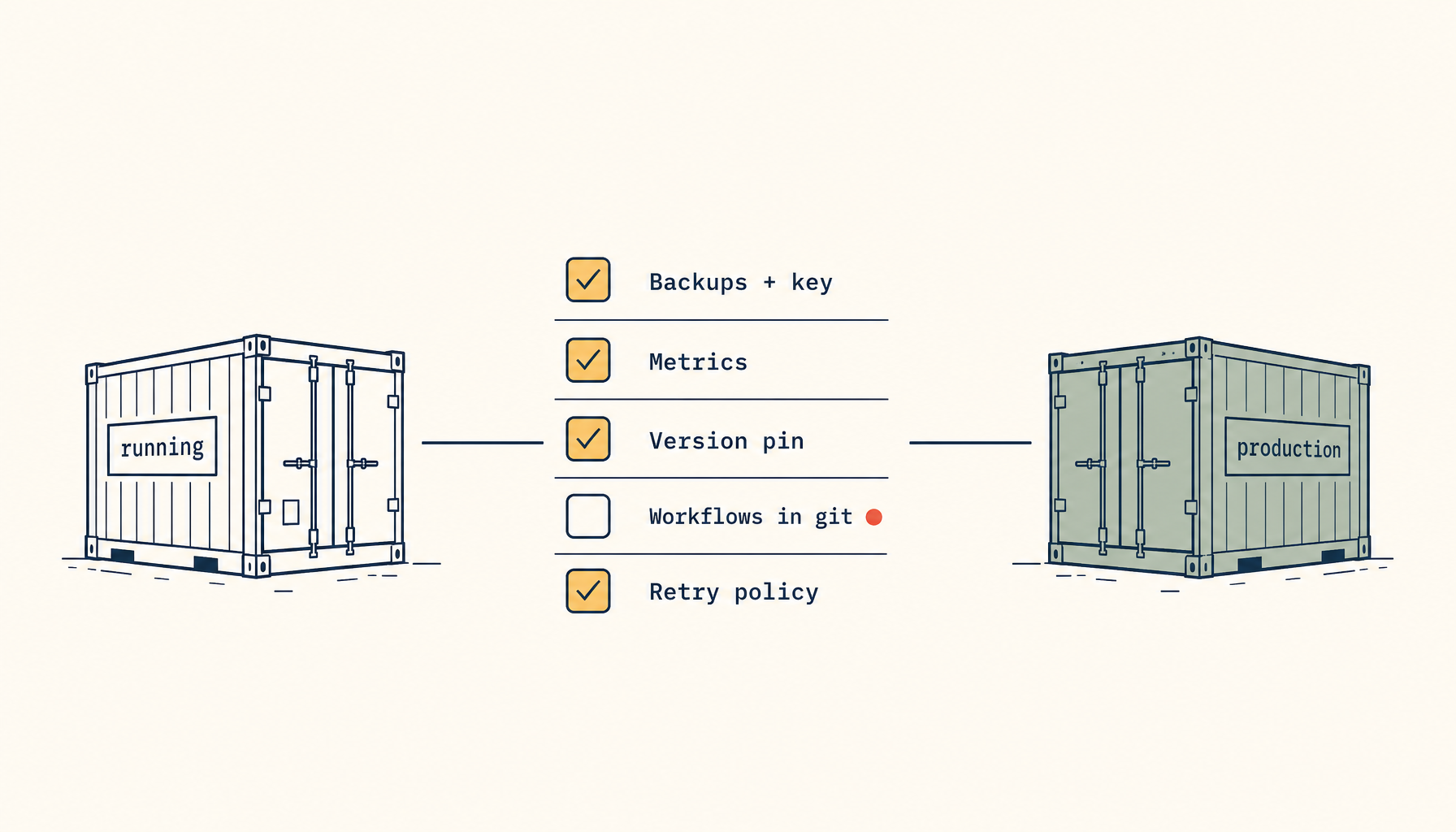
- Counted total cost: VPS bills vs hardware + power + your time.
- Public/uptime-critical workloads → keep on a VPS.
- Storage/media/private workloads → homelab.
- Considered a hybrid: home for bulk, VPS for the public edge.
- Benchmarked the target before trusting it.
Takeaway
A budget homelab can beat a stack of small VPS bills — for storage, media, and private workloads where you accept being the on-call. For public, uptime-critical services, a few dollars of VPS buys reliability you can't replicate at home. Most people's best answer is both: homelab for the heavy private stuff, a small VPS for the edge that has to stay up.
From across the StoicSoft network
Hand-curated reads on the same topic from sister sites in the StoicSoft family.
 Deploy Handbook8 min read
Best single-dashboard app health for self-hosters who aren't ready for Prometheus
Homelab and VPS users want one calm dashboard for app health — not a full observability stack. Here are the tools that hit the middle layer between SSH and Grafana.
Read on stoicvps.com/handbook Deploy Handbook7 min read
Hosted vs Self-Hosted Nextcloud for Small Teams: The Hidden Ops Costs Decide It
Managed Nextcloud's monthly fee looks expensive next to a $10 VPS — until you price the ops the host quietly does for you. A real hosted-vs-self-hosted comparison for small teams.
Read on stoicvps.com/handbook Deploy Handbook8 min read
Proxmox panels vs lightweight deploy tools — which one do you actually need?
Homelab and VPS users keep conflating infrastructure management with application deployment. Here's how to tell whether you need a full Proxmox-style panel or just a deploy layer with monitoring.
Read on stoicvps.com/handbook