Why VPS Rebuild Automation Feels Fragile — and How to Make It Trustworthy
You automate the VPS rebuild with Ansible and Compose, and it still feels like it might not come back. The fragile parts are usually Traefik, mail, and state — here's how to harden them.

The dream is a single command that rebuilds your whole VPS from scratch: Ansible provisions the box, Compose brings up the apps, Traefik gets certs, mail flows, done. The reality is that even when it works, it feels fragile — you're never quite sure it'll come back identical, so you avoid testing it, which makes it more fragile. The fragility isn't random. It clusters in three places: TLS/edge, mail, and state. Harden those and a from-scratch rebuild becomes something you trust enough to actually run.
Why "automated" still feels risky
Provisioning packages and writing config files is the easy, idempotent 80%. The scary 20% is everything with an external dependency or persistent state: certificates issued by a rate-limited CA, mail that depends on DNS and reputation, and data that must survive the rebuild. Those don't reset cleanly, so a naive rebuild can hit a Let's Encrypt rate limit, send mail that bounces, or come up with empty databases.
Fragile part 1: Traefik and TLS
Certificate issuance is the classic rebuild trap. Rebuild too often and Let's Encrypt rate-limits you; lose the acme.json and every cert reissues at once.
- Persist
acme.jsonon a volume that survives rebuilds, so certs are reused, not reissued. - Use the DNS-01 challenge for wildcard/many-subdomain setups so issuance doesn't depend on the box being publicly reachable mid-rebuild.
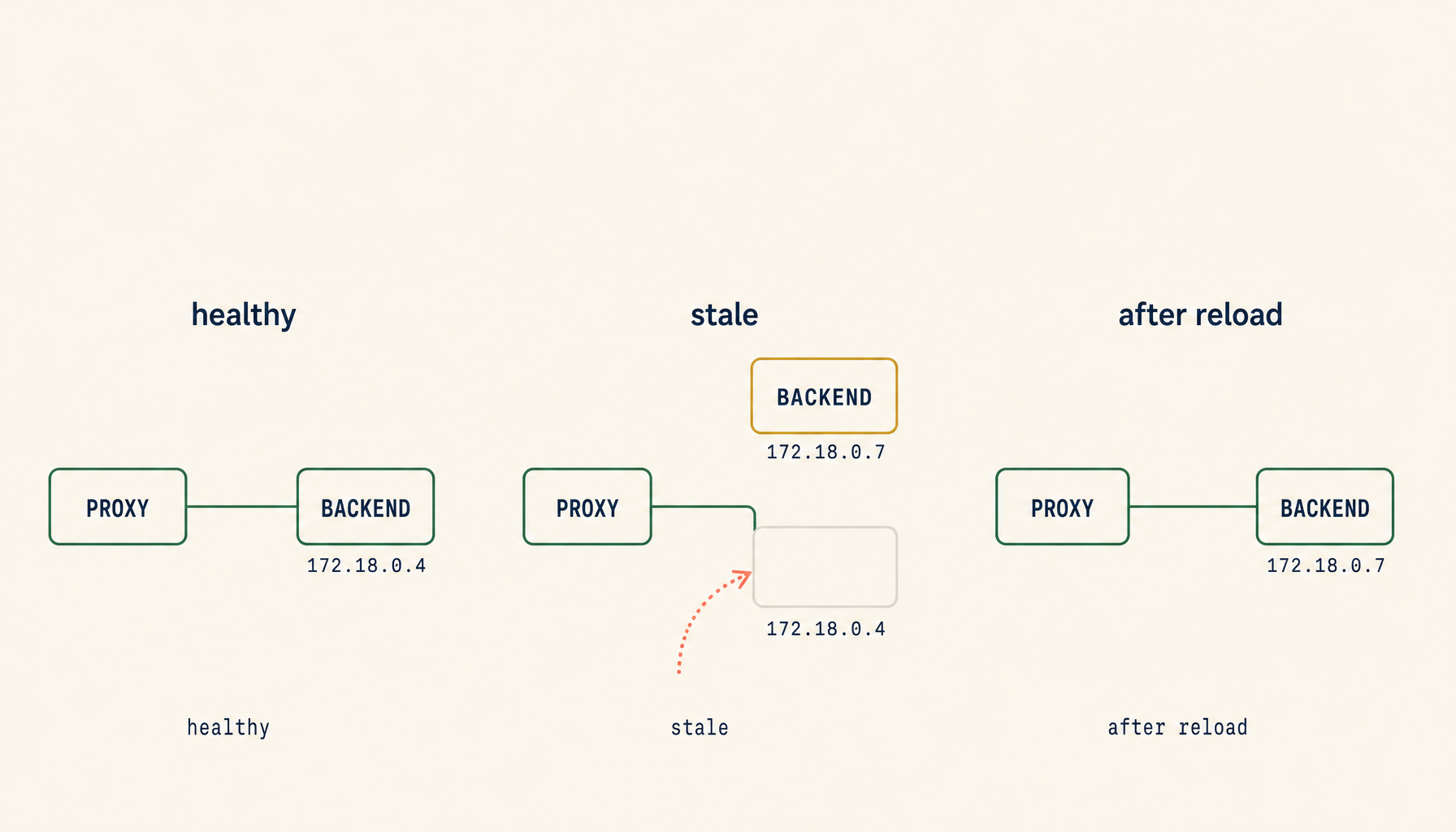
- Make sure renewal reloads cleanly — the exact failure in Let's Encrypt renew-and-reload behind a proxy.
Fragile part 2: mail
Mail is fragile because deliverability lives in DNS and reputation, not in your playbook. A rebuilt server with default mail config sends mail that lands in spam or is rejected outright.
- Keep SPF, DKIM, and DMARC as code/DNS that the rebuild references — see the mail-server domain prerequisites.
- Persist DKIM keys across rebuilds (rotating them on every rebuild breaks alignment).
- After a rebuild, send a test message and check it lands before trusting password resets and alerts to it.
Fragile part 3: state
Automation that rebuilds the machine but forgets the data is worse than no automation — it confidently produces an empty box. Separate cleanly:
- Code/config → in the repo, fully reproducible.
- Data → in volumes/backups, restored as a deliberate step, never assumed.
The rebuild playbook should restore state, and you should have drilled that restore. This is the same code-vs-state line that makes OS-EOL rebuilds safe.
Make it trustworthy by testing it
The reason rebuild automation feels fragile is that it's rarely exercised. Fix that:
- Rebuild onto a throwaway VPS regularly and verify every app comes up with its data.
- Keep the playbook idempotent — running it twice changes nothing the second time.
- Pin versions so "rebuild" doesn't silently mean "upgrade everything" and inherit Compose drift.
Checklist
-
acme.jsonpersisted; DNS-01 for wildcards; renewal reloads. - SPF/DKIM/DMARC as code; DKIM keys persisted; post-rebuild mail test.
- Code in repo, data in backups; restore is an explicit, drilled step.
- Playbook idempotent and version-pinned.
- Rebuild rehearsed on a throwaway box, end to end.
Takeaway
Rebuild automation feels fragile because the stateful, externally-dependent parts — TLS, mail, data — don't reset cleanly. Persist certs and DKIM keys, treat data restore as an explicit step, pin versions, and rehearse the whole thing on a throwaway box. Do that and "rebuild the VPS" becomes a command you trust instead of one you're afraid to run.
From across the StoicSoft network
Hand-curated reads on the same topic from sister sites in the StoicSoft family.