Beginners Don't Want a Docker Tutorial — They Want FreshRSS and n8n Running
The fastest way to lose a new self-hoster is to make them learn Docker before they get anything working. App-first install paths put the win first and the concepts later.

There are two ways to introduce someone to self-hosting. The common one starts with Docker: images, volumes, networks, Compose — and somewhere around the third concept, the person who just wanted an RSS reader quietly closes the tab. The better one is app-first: get FreshRSS or n8n actually running, with TLS and a backup, in the first session — then explain what a volume is once they care. Motivation follows a working app, not a finished tutorial.
Why Docker-first loses beginners
Docker is the right tool and the wrong starting point. A newcomer has to hold five abstractions in their head before any payoff, and each is a chance to fail in a way they can't yet diagnose. The drop-off isn't about intelligence; it's about ordering. You don't teach someone to drive by starting with the engine.
App-first: the win comes first
Flip the order. Session one ends with "FreshRSS is at https://reader.mydomain.com, it has my feeds, and it's backed up." The path that makes that possible:
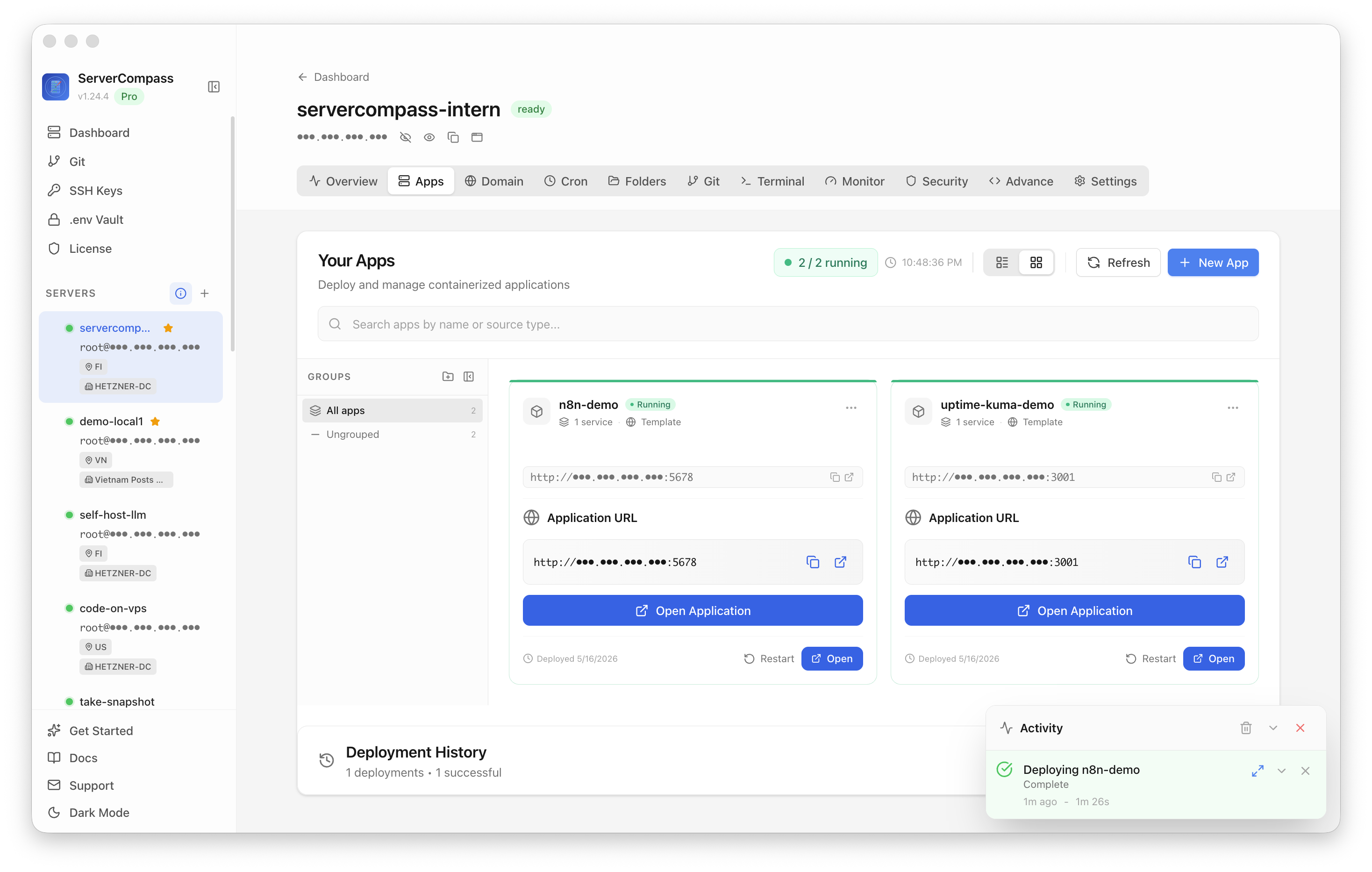
- Deploy from a template, so the app, its database, and TLS come up together without hand-edited YAML.
- A real hostname with HTTPS from the start, not an
http://ip:portthat feels broken on the phone. - A backup configured before real data goes in.
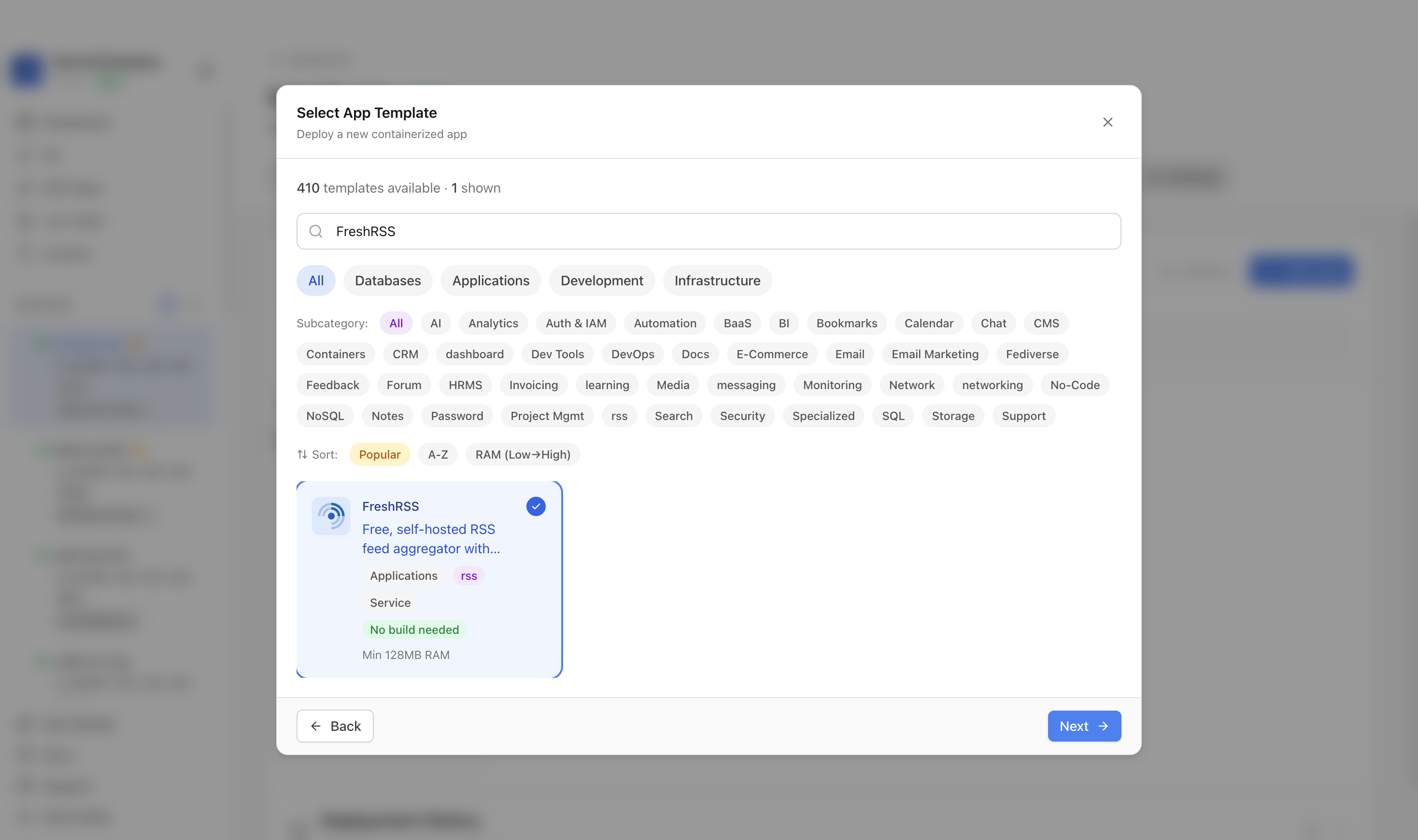 FreshRSS deployed from a template in ServerCompass — the beginner picks the app and gets a working, TLS-enabled instance instead of a Docker lesson.
n8n is the same story: a template deploy lands a working automation tool with persistence and HTTPS, so the first thing the newcomer does is build a workflow — the actual fun — not debug a port mapping. (When they're ready to run n8n seriously, the n8n production-readiness checklist is the next step.)
Teach the concepts after the win
Once the app is running and they're attached to it, the concepts land because they're now answers to real questions:
- "Where do my feeds live?" → volumes.
- "Why did it survive a reboot?" → restart policy + persistence.
- "How do I not lose this?" → backups and a restore drill.
- "How is it private?" → TLS and access control.
Each concept is now motivated. That's the difference between learning and bouncing.
The app-first checklist
- App reachable at a real HTTPS hostname in session one.
- Template/managed deploy, not hand-edited Compose, for the first install.
- Backup configured before real data is added.
- Concepts introduced as answers to questions the working app raises.
The same gentle on-ramp works for heavier apps too — see an easy Immich install path.
Takeaway
Beginners don't bounce off self-hosting because it's hard; they bounce because the concepts come before the payoff. Lead with a running FreshRSS or n8n — TLS and backups included — and teach Docker afterward, when the questions are theirs. Win first, theory second.
From across the StoicSoft network
Hand-curated reads on the same topic from sister sites in the StoicSoft family.
 Deploy Handbook8 min read
Best single-dashboard app health for self-hosters who aren't ready for Prometheus
Homelab and VPS users want one calm dashboard for app health — not a full observability stack. Here are the tools that hit the middle layer between SSH and Grafana.
Read on stoicvps.com/handbook Deploy Handbook7 min read
Hosted vs Self-Hosted Nextcloud for Small Teams: The Hidden Ops Costs Decide It
Managed Nextcloud's monthly fee looks expensive next to a $10 VPS — until you price the ops the host quietly does for you. A real hosted-vs-self-hosted comparison for small teams.
Read on stoicvps.com/handbook