Heroku Alternatives (2026): Escape the Dyno Tax
Heroku pricing no longer makes sense for most teams. Here are the best alternatives with real cost comparisons and a clear winner.
Heroku was the original "git push to deploy" experience. It shaped how an entire generation thinks about hosting.
But in 2026, the math does not work anymore. Heroku's pricing has not kept pace with what you can get elsewhere, and the free tier is long gone.
This guide gives you the best paths out, depending on what matters to you.
Why developers leave Heroku
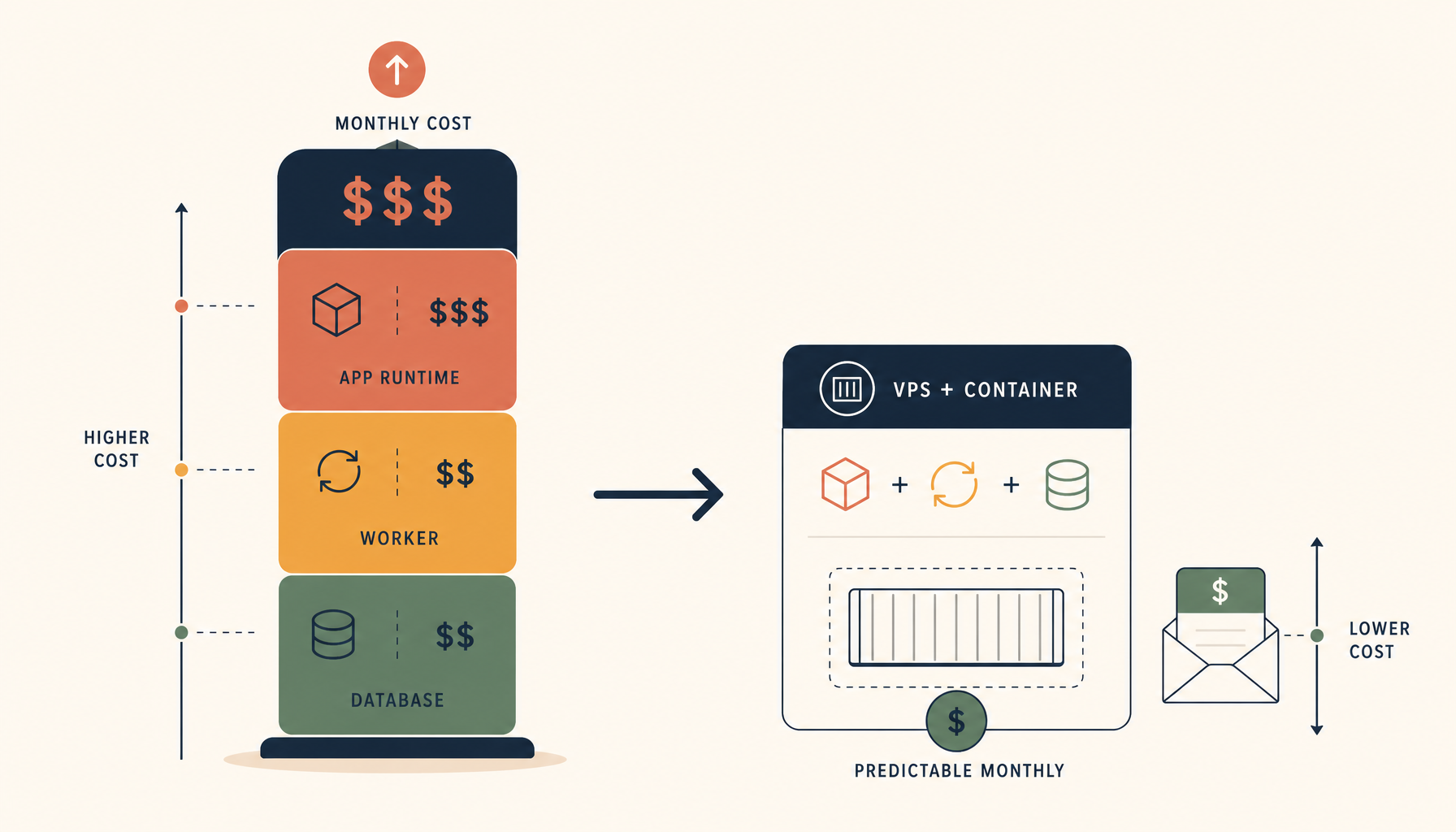
- The dyno tax is real. A basic dyno costs $7/month. Add a hobby Postgres ($9) and a worker dyno ($7), and you are at $23/month for something you could run on a $6 VPS.
- Scaling is expensive. Standard dynos start at $25 each. Performance dynos are $250+. The moment you need real resources, Heroku becomes one of the most expensive options.
- The ecosystem aged. Heroku was innovative in 2012. In 2026, the deployment primitives (Docker, GitHub Actions, Traefik) are better and free.
- Salesforce ownership uncertainty. Since the Salesforce acquisition, the platform has felt like maintenance mode. Teams worry about long-term investment.
The comparison table
| Option | Best for | Cost signal | Trade-off |
|---|---|---|---|
| Railway | Heroku-like DX, faster iteration | $5-$60/mo | still usage-based |
| Render | closest Heroku replacement | $7-$85/mo | similar pricing model |
| Fly.io | global deploys, more control | $5-$40/mo | steeper learning curve |
| Coolify | self-hosted Heroku feel | VPS cost only | you maintain it |
| VPS + Docker | predictable cost, full control | $6-$25/mo | you own ops |
Alternative 1: Railway (best Heroku-like experience)
Railway is what Heroku should have become. Fast deploys, clean UI, and a pricing model that at least tries to be fair.
Where it wins:
- Deploy from GitHub in minutes
- Postgres, Redis, and workers are first-class
- The UI is modern and fast
- Cost is often 30-50% less than equivalent Heroku setup
Where it loses:
- Still usage-based, so costs can creep
- No free tier for always-on apps
- Less mature ecosystem than Heroku (fewer add-ons)
When to pick it:
- You loved Heroku's workflow but hated the bill
- You want to migrate fast without learning new concepts
- Your app is small to medium sized
Alternative 2: Render (closest direct replacement)
Render explicitly positions itself as a Heroku alternative. The migration path is straightforward.
Where it wins:
- Heroku-like concepts (web services, background workers, cron)
- Native Postgres with automatic backups
- Free tier for static sites
- Preview environments built in
Where it loses:
- Pricing is similar to Heroku at scale
- Cold starts on free tier are brutal
- Less flexibility than Railway for complex setups
When to pick it:
- You want the easiest possible migration from Heroku
- You need preview environments for every PR
- Your team is non-technical and needs a simple UI
Alternative 3: Fly.io (more control, better global performance)
Fly is the "graduate" option. More powerful, but requires you to understand a bit more about infrastructure.
Where it wins:
- Multi-region deployment without complexity
- Persistent volumes (unlike Heroku's ephemeral filesystem)
- Better price-to-performance ratio
- Postgres runs on Fly itself (not a separate vendor)
Where it loses:
- CLI-first workflow (less GUI hand-holding)
- Documentation assumes some infra knowledge
- Debugging requires reading logs and understanding networking
When to pick it:
- You need global latency optimization
- You are comfortable with CLI tools
- You want persistent storage without external services
Alternative 4: Coolify (self-hosted Heroku)
Coolify gives you a Heroku-like UI on your own server. It is open source and actively maintained.
Where it wins:
- One-click deploys for common stacks
- Central dashboard for multiple apps
- No per-app pricing, just your server cost
- Full data ownership
Where it loses:
- You maintain the platform itself
- Upgrades and debugging are on you
- Smaller community than commercial options
When to pick it:
- You want the Heroku experience without Heroku pricing
- You are comfortable maintaining your own infrastructure
- You have multiple apps that would cost too much on Heroku
Alternative 5: VPS + Docker (the value winner)
This is the boring answer. Boring wins in hosting.
A typical setup:
- Hetzner CX22 ($6/mo) or CX32 ($12/mo)
- Docker + Docker Compose
- Traefik for reverse proxy and automatic HTTPS
- GitHub Actions for CI/CD
Where it wins:
- Flat, predictable monthly cost
- Run 5+ apps on a single server
- No vendor lock-in
- Full control over runtime and networking
Where it loses:
- Initial learning curve (one day to set up properly)
- You must handle backups and monitoring
- No "click to scale" option
When to pick it:
- Your Heroku bill is your main pain point
- You have stable, predictable traffic
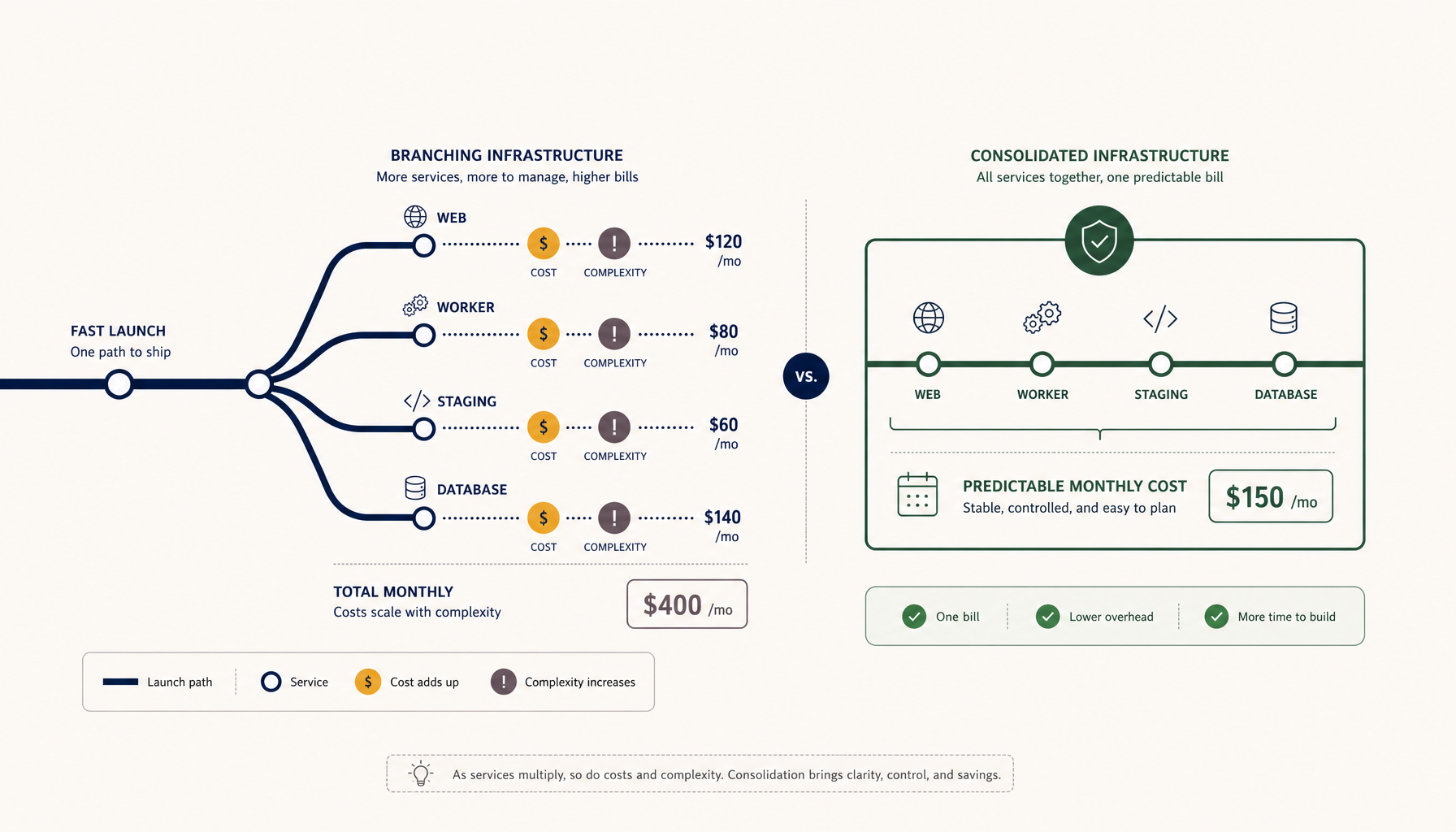
- You want to consolidate multiple services
Verdict: what I recommend in 2026
For most teams leaving Heroku:
Start with Railway if you want the fastest migration with minimal learning. It is the closest thing to "Heroku but better" and will cut your bill immediately.
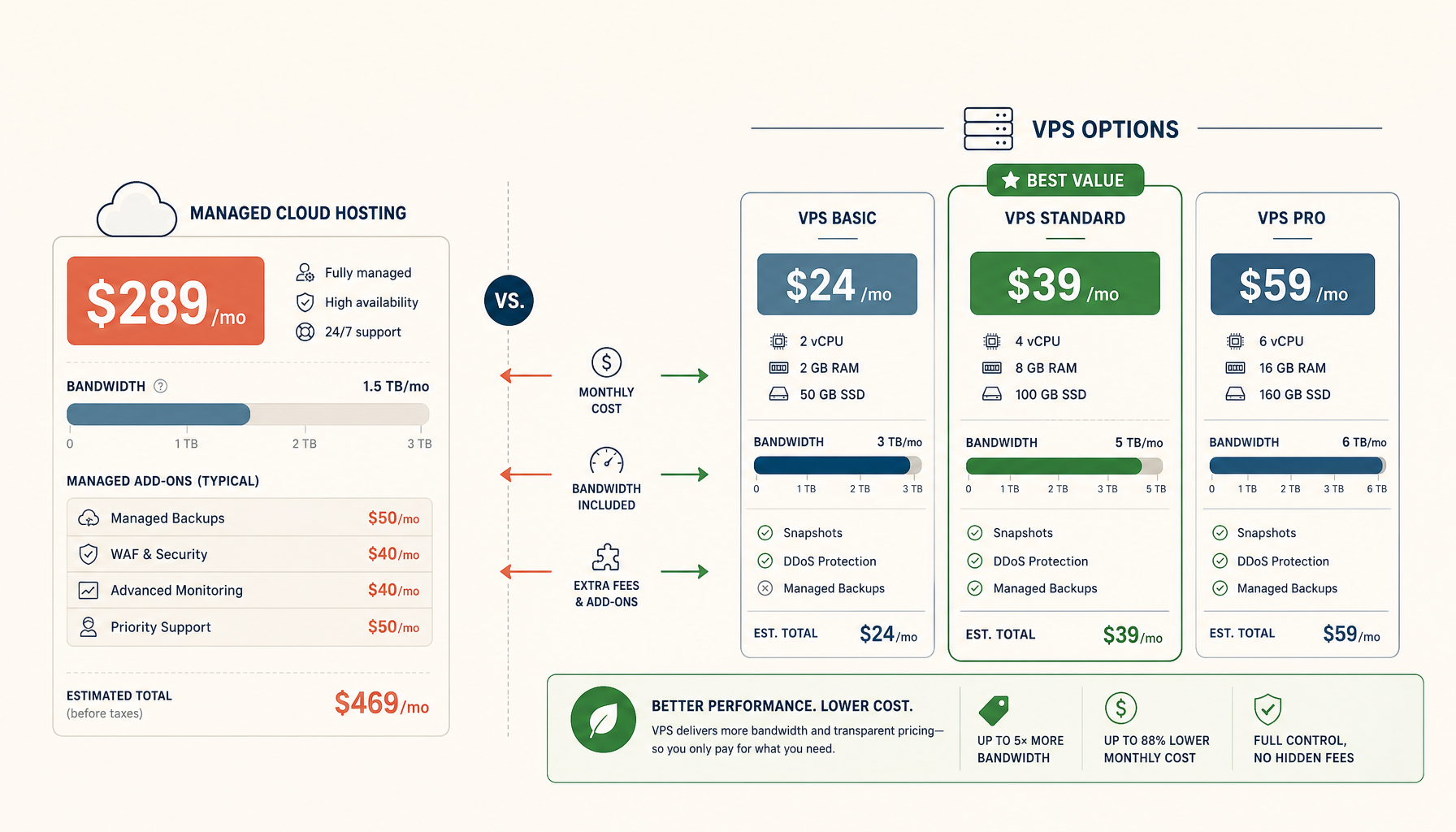
Move to a VPS when you have stable traffic and you are ready to own your infrastructure. The cost difference is dramatic: what costs $50-100/month on Heroku or Railway costs $6-20/month on a VPS.
Heroku made deployment easy for a generation of developers. That generation now knows enough to run their own servers. The training wheels can come off.
Where to go next
Tutorials:
Comparisons:
ServerCompass: